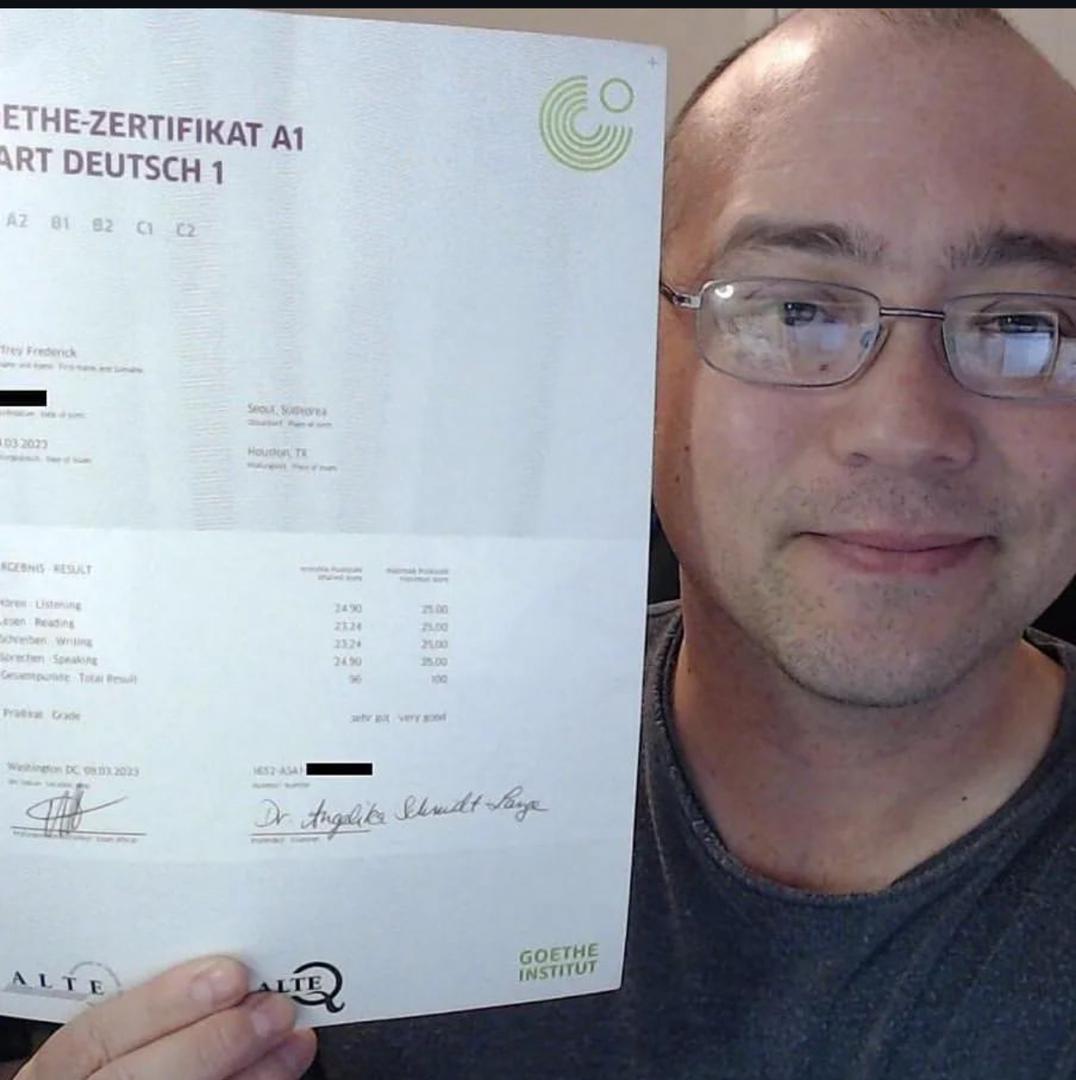
Zertifikat Telc B1
Add a review FollowOverview
-
Founded Date May 26, 1970
-
Sectors Telecommunications
-
Posted Jobs 0
-
Viewed 174

Company Description
11 Ways To Completely Revamp Your Buy B1 Certificate
Understanding the B1 Certificate: A Comprehensive Guide
Worldwide of language efficiency, the B1 Certificate holds a significant location, mostly functioning as evidence of an intermediate level of language abilities. This article delves deeply into what the B1 Certificate is, why it’s valuable, how to obtain it, and common questions surrounding this certification.
What is the B1 Certificate?
The B1 Certificate is a language efficiency certification that lines up with the Common European Framework of Reference for Languages (CEFR). It indicates that an individual can understand and interact in a language (generally English, however likewise applicable to other languages) at an intermediate level. This means that a B1 speaker can:
- Understand the primary points of clear standard speech on familiar matters.
- Handle many circumstances most likely to arise while traveling or studying in an area where the language is spoken.
- Produce basic connected text on topics that recognize or of personal interest.
- Describe experiences, occasions, dreams, and ambitions, in addition to describe reasons for viewpoints and strategies.
Why is the B1 Certificate Valuable?
Obtaining a B1 Certificate can yield numerous advantages, consisting of:
-
Educational Opportunities: Many universities require a B1 level of proficiency for admission to specific programs, specifically those taught in the target language.
-
Employment Prospects: Employers typically try to find people with proven language abilities, and a B1 Certificate can improve one’s CV.
-
Immigration and Residency: Some nations need evidence of language proficiency for residency applications or citizenship, and a B1 Certificate is often sufficient for these functions.
-
Individual Motivation: For geothezertifikat4all.de lots of, acquiring a B1 Certificate represents a turning point in their language finding out journey, offering inspiration to continue enhancing.
How to Obtain a B1 Certificate
Getting a B1 Certificate normally includes taking a standardized language evaluation. The process typically includes the following actions:
1. Preparation
Candidates can select from different research study approaches, including:
- Classes: Enrolling in language courses specifically created to prepare trainees for the B1 evaluation.
- Self-Study: Utilizing books, online resources, and language learning applications.
- Language Exchange: Practicing with native speakers or fellow students.
2. Selecting an Exam
A number of companies offer B1 level examinations, each with various formats and scoring systems. A few of the most recognized exams include:
| Examination Body | Exam Name | Language Offered |
|---|---|---|
| Cambridge Assessment | B1 Preliminary (PET) | English |
| Goethe-Institut | Goethe-Zertifikat B1 | German |
| DELF/DALF | DELF B1 | French |
| Instituto Cervantes | DELE B1 | Spanish |
| Trinity College London | ISE Foundations | English |
3. Signing up for the Exam
Once prepared, prospects can sign up for their chosen examination through the particular organizations’ websites or local evaluation centers. Registration frequently requires the submission of personal info and payment of evaluation charges.
4. Taking the Exam
The B1 assessments normally evaluate 4 primary abilities:
- Listening: Understanding spoken language in various contexts.
- Checking out: Comprehending written texts, such as posts and messages.
- Composing: Producing text related to individual or familiar topics.
- Speaking: Demonstrating conversational abilities through dialogues or presentations.
5. Receiving the Results
After taking the exam, candidates will get their results within a designated timeframe, normally ranging from a few days to several weeks. Effective prospects will get their B1 Certificate.
Regularly Asked Questions (FAQ)
1. For how long does it require to prepare for the B1 Certificate?Preparation time varies depending on the individual’s current proficiency level and study dedication. Usually, it might take anywhere from 3 to 6 months of devoted research study to reach B1 efficiency.
2. What materials are suggested for B1 preparation?Advised products consist of CEFR-aligned textbooks, online courses, language apps like Duolingo, and practice assessments.
3. Can I take the B1 assessment online?Yes, many evaluation bodies now use online testing options. Candidates need to examine the particular treatments of the evaluation they select.
4. What happens if I don’t pass the B1 exam?Prospects can retake the assessment after a specified duration, usually after a few months. Continued study and practice are advised to improve ratings.
5. Is the B1 Certificate recognized worldwide?Yes, the B1 Certificate is extensively recognized in numerous countries, particularly for educational and migration functions.
The B1 Certificate is not simply a notepad confirming language proficiency; it is a secret that opens doors to numerous opportunities in education, work, and personal development. By comprehending the requirements, preparation techniques, and advantages of obtaining this certificate, candidates can navigate their language finding out journey more successfully. For those considering obtaining the B1 Certificate, now is the time to do something about it and embark on this gratifying path.
With the right approach and dedication, achieving B1 proficiency can be a substantial step towards fluency and further language ventures.