


Mgsf Sport Formation
Add a review FollowOverview
-
Founded Date February 25, 2009
-
Sectors Automotive Jobs
-
Posted Jobs 0
-
Viewed 94

Company Description
What Is Artificial Intelligence & Machine Learning?
“The advance of innovation is based on making it suit so that you don’t actually even discover it, so it’s part of everyday life.” – Bill Gates
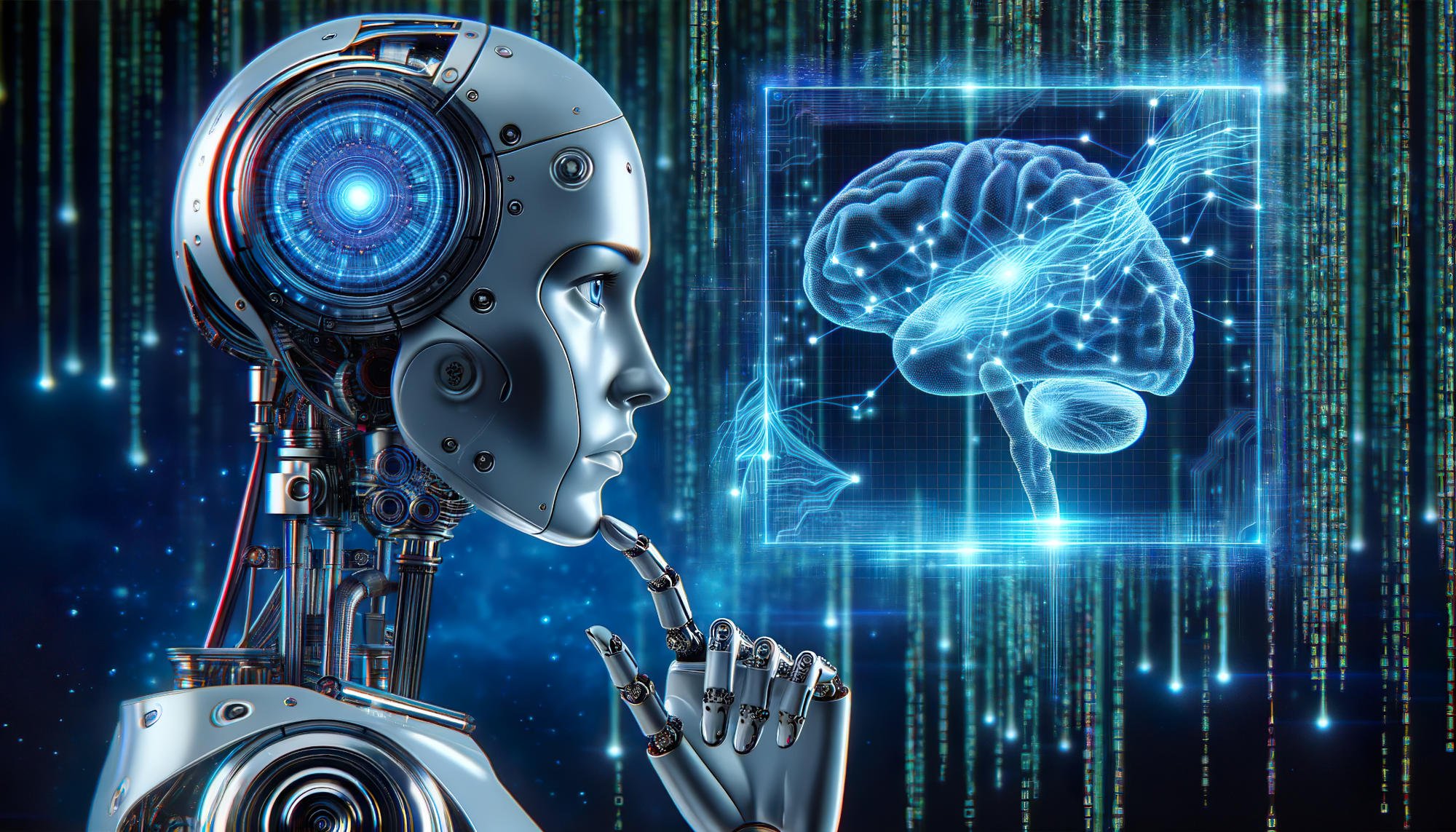
Artificial intelligence is a brand-new frontier in innovation, marking a substantial point in the history of AI. It makes computer systems smarter than before. AI lets machines believe like human beings, doing complex tasks well through advanced machine learning algorithms that specify machine intelligence.
In 2023, the AI market is anticipated to strike $190.61 billion. This is a big jump, showing AI’s big influence on industries and the capacity for a second AI winter if not managed correctly. It’s altering fields like health care and finance, making computer systems smarter and more effective.
AI does more than just basic tasks. It can comprehend language, see patterns, and resolve huge issues, exemplifying the capabilities of innovative AI chatbots. By 2025, AI is a powerful tool that will develop 97 million new tasks worldwide. This is a huge modification for work.
At its heart, AI is a mix of human imagination and computer system power. It opens up brand-new methods to solve problems and innovate in numerous areas.
The Evolution and Definition of AI
Artificial intelligence has come a long way, showing us the power of innovation. It started with simple ideas about makers and how smart they could be. Now, AI is far more advanced, altering how we see innovation’s possibilities, with recent advances in AI pushing the borders further.
AI is a mix of computer science, mathematics, brain science, and psychology. The concept of artificial neural networks grew in the 1950s. Researchers wanted to see if makers could learn like human beings do.
History Of Ai
The Dartmouth Conference in 1956 was a huge moment for AI. It existed that the term “artificial intelligence” was first utilized. In the 1970s, machine learning started to let computers gain from data on their own.
“The goal of AI is to make makers that comprehend, believe, learn, and act like people.” AI Research Pioneer: A leading figure in the field of AI is a set of ingenious thinkers and designers, also referred to as artificial intelligence experts. concentrating on the latest AI trends.
Core Technological Principles
Now, AI utilizes complicated algorithms to handle substantial amounts of data. Neural networks can find intricate patterns. This helps with things like recognizing images, understanding language, and making decisions.
Contemporary Computing Landscape
Today, AI uses strong computer systems and advanced machinery and intelligence to do things we thought were impossible, marking a brand-new period in the development of AI. Deep learning models can handle substantial amounts of data, showcasing how AI systems become more effective with big datasets, which are typically used to train AI. This assists in fields like healthcare and finance. AI keeps getting better, promising a lot more remarkable tech in the future.
What Is Artificial Intelligence: A Comprehensive Overview
Artificial intelligence is a new tech area where computer systems think and imitate humans, often referred to as an example of AI. It’s not simply basic responses. It’s about systems that can learn, change, and fix difficult issues.
“AI is not almost producing intelligent makers, but about comprehending the essence of intelligence itself.” – AI Research Pioneer
AI research has grown a lot throughout the years, leading to the introduction of powerful AI options. It started with Alan Turing’s work in 1950. He came up with the Turing Test to see if devices might act like humans, contributing to the field of AI and machine learning.
There are lots of kinds of AI, consisting of weak AI and strong AI. Narrow AI does something effectively, like acknowledging pictures or translating languages, showcasing one of the types of artificial intelligence. General intelligence aims to be clever in lots of ways.
Today, AI goes from easy makers to ones that can remember and predict, showcasing advances in machine learning and deep learning. It’s getting closer to understanding human sensations and thoughts.
“The future of AI lies not in replacing human intelligence, but in enhancing and expanding our cognitive capabilities.” – Contemporary AI Researcher
More business are utilizing AI, and it’s altering numerous fields. From assisting in health centers to catching fraud, AI is making a huge impact.
How Artificial Intelligence Works
Artificial intelligence modifications how we fix problems with computers. AI utilizes clever machine learning and neural networks to deal with big information. This lets it offer first-class aid in many fields, showcasing the benefits of artificial intelligence.
Data science is key to AI’s work, especially in the development of AI systems that require human intelligence for ideal function. These smart systems learn from great deals of information, finding patterns we may miss out on, which highlights the benefits of artificial intelligence. They can discover, change, and predict things based upon numbers.
Information Processing and Analysis
AI can turn basic information into beneficial insights, which is a vital element of AI development. It uses advanced approaches to rapidly go through huge information sets. This helps it find essential links and provide excellent recommendations. The Internet of Things (IoT) assists by giving powerful AI lots of information to work with.
Algorithm Implementation
“AI algorithms are the intellectual engines driving intelligent computational systems, equating intricate information into significant understanding.”
Developing AI algorithms requires careful planning and coding, specifically as AI becomes more integrated into various markets. Machine learning designs get better with time, making their predictions more accurate, as AI systems become increasingly adept. They use stats to make clever options by themselves, leveraging the power of computer programs.
Decision-Making Processes
AI makes decisions in a few ways, usually needing human intelligence for complicated scenarios. Neural networks assist machines believe like us, fixing problems and predicting outcomes. AI is altering how we take on tough problems in healthcare and financing, highlighting the advantages and disadvantages of artificial intelligence in crucial sectors, where AI can analyze patient results.
Types of AI Systems
Artificial intelligence covers a large range of abilities, from narrow ai to the dream of artificial general intelligence. Right now, narrow AI is the most typical, doing specific tasks very well, although it still typically requires human intelligence for wider applications.
Reactive makers are the simplest form of AI. They respond to what’s happening now, without keeping in mind the past. IBM’s Deep Blue, which beat chess champion Garry Kasparov, is an example. It works based upon rules and what’s taking place ideal then, similar to the functioning of the human brain and the principles of responsible AI.
“Narrow AI excels at single tasks but can not run beyond its predefined parameters.”
Minimal memory AI is a step up from reactive makers. These AI systems gain from past experiences and get better gradually. Self-driving automobiles and Netflix’s motion picture ideas are examples. They get smarter as they go along, showcasing the finding out abilities of AI that imitate human intelligence in machines.
The concept of strong ai includes AI that can understand feelings and think like human beings. This is a huge dream, but researchers are working on AI governance to guarantee its ethical usage as AI becomes more widespread, considering the advantages and disadvantages of artificial intelligence. They want to make AI that can deal with intricate thoughts and sensations.
Today, a lot of AI uses narrow AI in lots of locations, highlighting the definition of artificial intelligence as focused and specialized applications, which is a subset of artificial intelligence. This consists of things like facial recognition and robots in factories, showcasing the many AI applications in various industries. These examples demonstrate how useful new AI can be. However they likewise demonstrate how difficult it is to make AI that can truly believe and adjust.
Machine Learning: The Foundation of AI
Machine learning is at the heart of artificial intelligence, representing among the most effective types of artificial intelligence available today. It lets computers improve with experience, even without being informed how. This tech helps algorithms gain from information, area patterns, and make wise choices in intricate circumstances, similar to human intelligence in machines.
Data is type in machine learning, as AI can analyze huge amounts of details to obtain insights. Today’s AI training utilizes big, differed datasets to build clever designs. Experts state getting data all set is a huge part of making these systems work well, particularly as they include models of artificial neurons.
Supervised Learning: Guided Knowledge Acquisition
Monitored learning is a method where algorithms gain from labeled information, a subset of machine learning that improves AI development and is used to train AI. This indicates the data includes answers, helping the system comprehend how things relate in the realm of machine intelligence. It’s used for tasks like acknowledging images and forecasting in finance and healthcare, highlighting the diverse AI capabilities.
Unsupervised Learning: Discovering Hidden Patterns
Not being watched knowing works with data without labels. It finds patterns and structures by itself, demonstrating how AI systems work effectively. Techniques like clustering help find insights that humans might miss out on, beneficial for market analysis and finding odd data points.
Reinforcement Learning: Learning Through Interaction
Support knowing is like how we find out by trying and getting feedback. AI systems learn to get benefits and play it safe by connecting with their environment. It’s great for robotics, game techniques, and making self-driving automobiles, all part of the generative AI applications landscape that also use AI for boosted performance.
“Machine learning is not about ideal algorithms, however about constant improvement and adaptation.” – AI Research Insights
Deep Learning and Neural Networks
Deep learning is a new method artificial intelligence that makes use of layers of artificial neurons to improve efficiency. It utilizes artificial neural networks that work like our brains. These networks have many layers that help them comprehend patterns and examine data well.
“Deep learning changes raw information into meaningful insights through elaborately connected neural networks” – AI Research Institute
Convolutional neural networks (CNNs) and recurrent neural networks (RNNs) are key in deep learning. CNNs are great at dealing with images and videos. They have special layers for various kinds of information. RNNs, on the other hand, are good at comprehending sequences, like text or audio, which is vital for developing models of artificial neurons.
Deep learning systems are more complex than basic neural networks. They have numerous concealed layers, not simply one. This lets them understand information in a much deeper method, improving their machine intelligence abilities. They can do things like understand language, acknowledge speech, and resolve complex problems, thanks to the developments in AI programs.
Research study shows deep learning is altering many fields. It’s utilized in health care, self-driving cars, and more, highlighting the types of artificial intelligence that are becoming essential to our every day lives. These systems can look through big amounts of data and find things we couldn’t in the past. They can identify patterns and make clever guesses using sophisticated AI capabilities.
As AI keeps improving, deep learning is leading the way. It’s making it possible for computers to understand and make sense of complicated data in new methods.
The Role of AI in Business and Industry
Artificial intelligence is altering how organizations operate in lots of locations. It’s making digital changes that assist business work better and faster than ever before.
The impact of AI on service is big. McKinsey & & Company states AI use has actually grown by half from 2017. Now, 63% of business want to spend more on AI quickly.
“AI is not simply a technology trend, however a tactical vital for modern-day businesses seeking competitive advantage.”
Business Applications of AI
AI is used in lots of company locations. It helps with customer care and making wise forecasts utilizing machine learning algorithms, which are widely used in AI. For example, AI tools can lower mistakes in intricate jobs like financial accounting to under 5%, demonstrating how AI can analyze patient information.

Digital Transformation Strategies
Digital changes powered by AI aid companies make better options by leveraging advanced machine intelligence. Predictive analytics let companies see market trends and improve customer experiences. By 2025, AI will produce 30% of marketing material, says Gartner.
Efficiency Enhancement
AI makes work more efficient by doing routine tasks. It might conserve 20-30% of staff member time for more vital tasks, enabling them to implement AI strategies successfully. Business using AI see a 40% increase in work efficiency due to the implementation of modern AI technologies and the advantages of artificial intelligence and machine learning.
AI is changing how services safeguard themselves and serve clients. It’s helping them remain ahead in a digital world through using AI.
Generative AI and Its Applications
Generative AI is a brand-new way of thinking about artificial intelligence. It goes beyond just forecasting what will occur next. These sophisticated models can create brand-new material, like text and images, that we’ve never seen before through the simulation of human intelligence.
Unlike old algorithms, generative AI utilizes wise machine learning. It can make original information in several areas.
“Generative AI changes raw data into innovative imaginative outputs, pushing the borders of technological development.”
Natural language processing and computer vision are key to generative AI, which relies on innovative AI programs and the development of AI technologies. They help machines comprehend and make text and images that appear real, which are likewise used in AI applications. By learning from huge amounts of data, AI models like ChatGPT can make very in-depth and smart outputs.
The transformer architecture, introduced by Google in 2017, is a big deal. It lets AI comprehend complicated relationships in between words, similar to how artificial neurons function in the brain. This suggests AI can make content that is more accurate and in-depth.
Generative adversarial networks (GANs) and diffusion designs also help AI improve. They make AI a lot more powerful.
Generative AI is used in lots of fields. It helps make chatbots for customer care and produces marketing material. It’s changing how organizations think about creativity and solving problems.
Companies can use AI to make things more personal, design brand-new products, and make work easier. Generative AI is getting better and much better. It will bring new levels of innovation to tech, business, and creativity.
AI Ethics and Responsible Development
Artificial intelligence is advancing quick, but it raises huge obstacles for AI developers. As AI gets smarter, we need strong ethical rules and personal privacy safeguards more than ever.
Worldwide, groups are striving to create strong ethical standards. In November 2021, UNESCO made a huge action. They got the very first international AI principles contract with 193 nations, resolving the disadvantages of artificial intelligence in worldwide governance. This shows everybody’s dedication to making tech development accountable.
Privacy Concerns in AI
AI raises huge personal privacy concerns. For instance, the Lensa AI app used billions of pictures without asking. This reveals we need clear guidelines for using data and getting user permission in the context of responsible AI practices.
“Only 35% of international customers trust how AI innovation is being executed by companies” – showing many individuals question AI’s existing use.
Ethical Guidelines Development
Developing ethical rules needs a team effort. Huge tech business like IBM, Google, and Meta have unique teams for principles. The Future of Life Institute’s 23 AI Principles use a basic guide to handle dangers.
Regulative Framework Challenges
Developing a strong regulatory structure for AI requires teamwork from tech, policy, and academic community, particularly as artificial intelligence that uses sophisticated algorithms becomes more widespread. A 2016 report by the National Science and Technology Council stressed the need for good governance for AI’s social effect.
Working together throughout fields is crucial to solving predisposition concerns. Utilizing approaches like adversarial training and varied teams can make AI fair and inclusive.
Future Trends in Artificial Intelligence
The world of artificial intelligence is changing fast. New innovations are altering how we see AI. Currently, 55% of companies are utilizing AI, marking a huge shift in tech.
“AI is not just an innovation, however a basic reimagining of how we fix intricate issues” – AI Research Consortium
Artificial general intelligence (AGI) is the next big thing in AI. New patterns reveal AI will soon be smarter and more flexible. By 2034, AI will be all over in our lives.
Quantum AI and new hardware are making computers better, leading the way for more advanced AI programs. Things like Bitnet designs and quantum computer systems are making tech more effective. This might assist AI fix tough problems in science and biology.
The future of AI looks incredible. Currently, 42% of big companies are using AI, and 40% are considering it. AI that can comprehend text, sound, forum.altaycoins.com and images is making makers smarter and showcasing examples of AI applications include voice recognition systems.
Guidelines for AI are beginning to appear, with over 60 countries making strategies as AI can lead to job transformations. These strategies intend to use AI’s power sensibly and safely. They want to make certain AI is used best and morally.
Advantages and Challenges of AI Implementation
Artificial intelligence is altering the game for businesses and industries with innovative AI applications that likewise highlight the advantages and disadvantages of artificial intelligence and human partnership. It’s not practically automating tasks. It opens doors to brand-new development and efficiency by leveraging AI and machine learning.
AI brings big wins to companies. Studies show it can conserve as much as 40% of expenses. It’s also very precise, with 95% success in different company areas, showcasing how AI can be used successfully.
Strategic Advantages of AI Adoption
Companies utilizing AI can make processes smoother and cut down on manual work through reliable AI applications. They get access to big information sets for smarter decisions. For instance, procurement teams talk better with providers and stay ahead in the video game.
Common Implementation Hurdles
However, AI isn’t simple to execute. Privacy and wino.org.pl information security concerns hold it back. Business deal with tech obstacles, skill gaps, and cultural pushback.
Threat Mitigation Strategies
“Successful AI adoption requires a balanced technique that integrates technological development with accountable management.”
To manage risks, plan well, keep an eye on things, and adjust. Train staff members, set ethical rules, and safeguard data. In this manner, AI‘s benefits shine while its threats are kept in check.
As AI grows, services need to remain flexible. They should see its power however likewise think critically about how to utilize it right.
Conclusion
Artificial intelligence is changing the world in big methods. It’s not just about brand-new tech; it’s about how we think and interact. AI is making us smarter by coordinating with computers.
Research studies show AI will not take our jobs, however rather it will change the nature of resolve AI development. Rather, it will make us better at what we do. It’s like having an incredibly smart assistant for setiathome.berkeley.edu many jobs.
Looking at AI’s future, we see excellent things, particularly with the recent advances in AI. It will help us make better choices and discover more. AI can make finding out enjoyable and reliable, increasing trainee results by a lot through making use of AI techniques.
However we should use AI wisely to make sure the concepts of responsible AI are promoted. We require to consider fairness and how it affects society. AI can fix big issues, but we need to do it right by comprehending the implications of running AI properly.
The future is intense with AI and people working together. With clever use of technology, we can tackle huge challenges, and examples of AI applications include improving effectiveness in various sectors. And we can keep being creative and fixing problems in brand-new methods.

